




- ホームページ
- >
- ニュース
- >
- 帯電防止手袋とは?その仕組み、種類、用途
- >
帯電防止手袋とは?その仕組み、種類、用途
2024-05-28 10:22
静電気は日常生活では無害に思えるかもしれないが、電子機器製造、半導体製造、クリーンルーム、研究所、その他の管理された環境では、制御されていない静電気放電は、繊細な部品を損傷したり、製造工程を妨害したり、安全上のリスクを生み出したりする可能性がある。
帯電防止手袋これらは、静電気の発生と蓄積を低減し、作業者が製品を安全かつ効率的に取り扱うことができるように設計されています。構造や用途に応じて、導電性繊維、カーボン糸、特殊コーティング、その他の静電気散逸性材料が組み込まれている場合があります。
しかし、帯電防止手袋はどのように機能するのでしょうか?何でできているのでしょうか?また、普通の手袋やESD手袋とはどう違うのでしょうか?
このガイドでは、帯電防止手袋を評価する際に、産業分野の購入者が理解しておくべき主要な原則、一般的な種類、素材、用途、および要素について説明します。
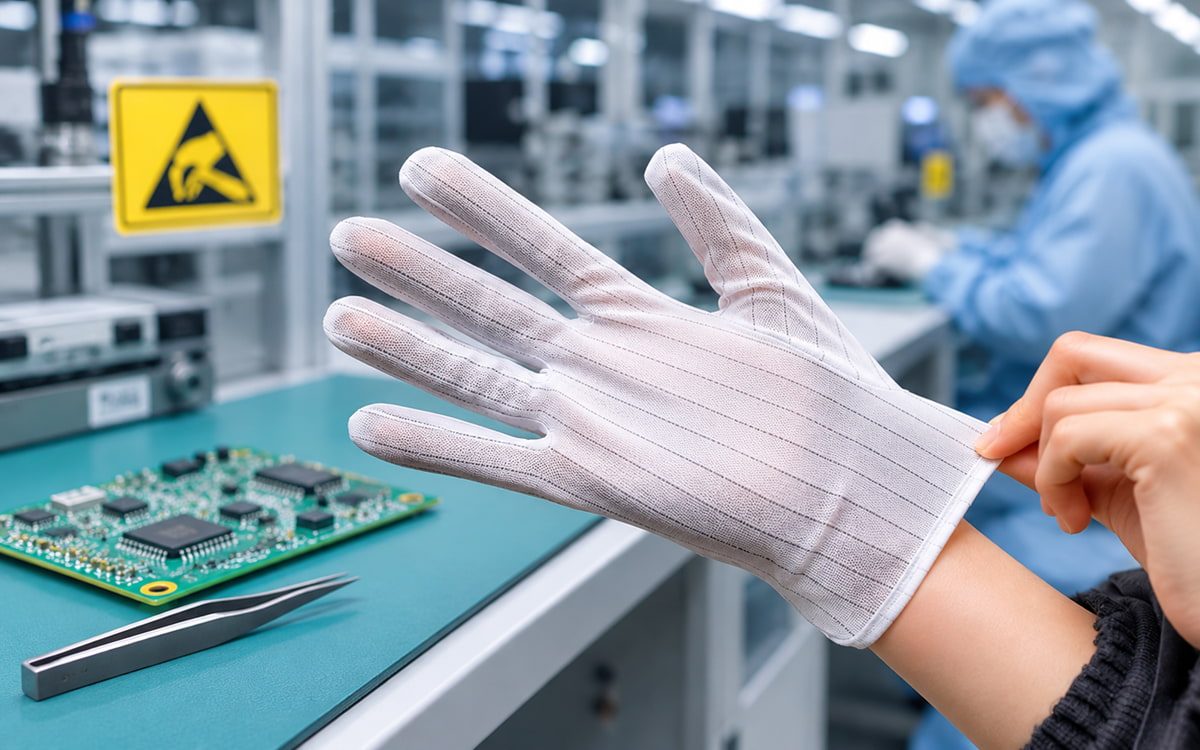
帯電防止手袋とは?
帯電防止手袋は、静電気の蓄積を抑制し、電気を制御された方法で放散するように設計された保護用または作業用手袋です。
これらは、静電気に弱い部品、精密製品、電子機器、または静電気放電から保護する必要のある材料を取り扱う際によく使用されます。
一般的な作業用手袋とは異なり、帯電防止手袋は通常、電気伝導性を制御する素材や構造を組み込んでいます。製品によっては、導電性カーボンファイバー、導電性糸、金属繊維、または特殊配合コーティングなどが用いられる場合があります。
目的は、手袋を金属線のように高い導電性を持たせることではない。むしろ、手袋は、着用者や手袋の表面に過剰な静電荷が蓄積するのを防ぐのに役立つ、制御された経路を提供するべきである。
そのため、帯電防止手袋は、より広範なESD制御システムの構成要素の一つとして一般的に使用されています。
帯電防止手袋はどのように機能するのですか?
静電気は、異なる物質間の摩擦や接触、分離によって発生することが多い。床を歩いたり、プラスチック部品を扱ったり、包装を取り外したり、合成繊維の衣類を動かしたりするだけで、静電気が発生する可能性がある。
その電荷が突然電子部品に移動すると、結果として生じる静電気放電によって、繊細な回路が損傷を受ける可能性があります。
帯電防止手袋は、静電気を散逸させる素材や導電性素材を手袋の構造に組み込むことで、このリスクを軽減するのに役立ちます。
例えば、編み手袋は、ポリエステル繊維やナイロン繊維に導電性カーボン糸を組み合わせることができる。この導電性ネットワークは、蓄積された電荷が手袋の表面に集中するのではなく、移動するための経路を提供する。
基本原理は次のように要約できます。
静電気の発生 → 導電性または散逸性の手袋構造 → 制御された電荷散逸 → 制御不能なESDのリスク低減
しかし、手袋は単独では機能しません。
効果的なESD対策には、通常、以下の項目を含む作業環境全体を考慮する必要があります。
帯電防止服
履物;
床材;
接地装置;
作業台。
湿度;
取り扱い手順
人員の地上待機。
そのため、帯電防止手袋は単独の解決策としてではなく、総合的な静電気制御システムの一部として扱うべきなのです。
帯電防止手袋は何でできていますか?
帯電防止手袋の構造は、その用途によって異なります。
ポリエステルとナイロン
軽量帯電防止手袋の主繊維としては、ポリエステルとナイロンがよく用いられる。
それらは以下のような利点を提供します。
優れた柔軟性。
軽量構造。
耐久性;
快適なフィット感。
精密な組み立て作業に適しています。
しかしながら、従来のポリエステルやナイロンだけでは、必ずしも必要な静電気散逸性能が得られるとは限りません。そのため、一般的には繊維構造に導電性成分が添加されます。
導電性カーボンファイバーまたはカーボン糸
炭素系導電性繊維は、ESD(静電気放電)対策や帯電防止繊維に広く用いられている。
これらは従来の繊維と混紡したり編み込んだりすることで、手袋全体に導電経路を作り出すことができる。
この構造は、電子機器の組み立て、半導体の取り扱い、精密製造、および関連用途向けに設計された手袋で特に一般的です。
導電性繊維および金属繊維
必要な電気特性に応じて、他の導電性材料を繊維糸に組み込むことも可能です。
建設導電性糸繊維組成、導電性材料含有量、糸間隔、織物構造など、さまざまな要素が最終的な静電気散逸性能に影響を与える可能性があります。
ポリウレタンコーティング
多くの帯電防止ニット手袋は、手のひらや指先にポリウレタン(PU)コーティングが施されている。
このコーティングにより、以下の点が改善されます。
グリップ;
耐摩耗性
精密な取り扱い
部品が皮膚に直接接触しないように保護する。
このため、PUコーティングされた帯電防止手袋は、電子機器の組み立てや、ESD制御と優れた指先の器用さの両方が求められるその他の用途で広く使用されています。
帯電防止手袋の主な種類は何ですか?
帯電防止手袋はすべて同じ目的で設計されているわけではありません。
主な製品タイプを理解することで、購入者は作業環境に合った手袋を選ぶことができる。
1. ニット製帯電防止手袋
これらの手袋は通常、ポリエステルまたはナイロンに導電性繊維を組み合わせた素材で作られています。
軽量で柔軟な構造のため、以下の用途に適しています。
電子機器の組み立て;
半導体の取り扱い
部品検査
精密製造。
最大限の通気性と柔軟性が求められる場合は、コーティングされていないものを使用することもあります。
2. PUコーティング帯電防止手袋
PUコーティング手袋は、導電性ニットライナーと、指先または手のひらに施されたポリウレタンコーティングを組み合わせたものです。
これらは、優れた操作性を維持しながら、グリップ力と耐摩耗性を向上させます。
代表的な用途としては、プリント基板の組み立て、電子部品の取り扱い、検査、試験、精密生産などが挙げられる。
3.帯電防止ストレッチ手袋
帯電防止ストレッチ手袋は、手と指にぴったりフィットするように設計されています。
より密着させることで、小型または繊細な部品を扱う際の触覚感度を向上させることができます。
このため、静的制御と精密な手動操作を組み合わせる必要がある用途において、特に有用となる。
4. ESD手袋
「"ESD グローブ"」と「" 帯電防止グローブ"」という用語はしばしば同義語として使われますが、購入者は製品用語だけに頼るのではなく、実際にテストされた電気的性能に注意を払うべきです。
ESDグローブは一般的に、静電気放電制御環境下での使用を想定して設計されています。そのため、その材質、抵抗特性、および接地システム全体との適合性は、想定される用途に合わせて検証する必要があります。
帯電防止手袋とESD手袋:違いは何ですか?
帯電防止手袋とESD手袋にはかなりの重複があり、そのためこれらの用語はしばしば混同される。
一般的に、"antistatic"とは、材料や製品が静電気の発生や電荷の蓄積を低減する能力を指します。
"ESD" は通常、定義された作業環境内での静電気放電の制御をより広義に指します。
したがって、帯電防止手袋はESD保護システムの一部となる可能性がありますが、購入者は「帯電防止手袋」として販売されているすべての手袋が、特定のESDプログラムの電気的性能要件を自動的に満たすと考えるべきではありません。
専門的な産業用途においては、より有用な質問は以下のとおりです。
どのような電気抵抗が測定されましたか?
どの試験方法が用いられましたか?
どの規格または顧客仕様が適用されますか?
グローブは他の接地対策とどのように相互作用しますか?
使用中、性能は安定していますか?
製品データやテストレポートは、専門用語だけよりも重要です。

帯電防止手袋はどこで使用されますか?
静電気防止手袋は、静電気によって製品、工程、または作業環境に影響が出る可能性のあるあらゆる産業で使用されています。
電子機器製造
電子機器は最も一般的な応用例の一つです。
プリント基板、電子部品、センサー、コネクタ、その他の繊細な部品を取り扱う作業員は、静電気放電(ESD)対策の一環として、帯電防止手袋を使用することがあります。
手袋は、手の油分、汗、汚染物質がデリケートな製品に付着するのを防ぐのにも役立ちます。
半導体製造
Semiconductor devices can be particularly sensitive to electrostatic discharge.
Antistatic or ESD-compatible gloves are therefore commonly used during wafer handling, chip manufacturing, assembly, inspection, and packaging.
Cleanrooms
Cleanroom environments often require control of both contamination and static electricity.
Low-linting antistatic gloves may be used together with cleanroom clothing, footwear, and other controlled-environment equipment.
However, cleanroom compatibility and antistatic performance are separate requirements. A glove intended for a cleanroom should be evaluated for particle generation, cleanliness, material compatibility, and ESD performance according to the actual application.
Precision Manufacturing
Antistatic gloves may also be used when assembling or handling precision instruments and small components where both cleanliness and static control are important.
Laboratories
Some laboratories use electrostatic-sensitive equipment, instruments, or samples.
Appropriate gloves can help reduce contamination while supporting the facility's broader static-control procedures.
Are Nitrile Gloves Antistatic?
Standard nitrile gloves should not automatically be assumed to be antistatic.
Nitrile is widely used because of its chemical resistance, puncture resistance, and disposable glove performance, but static characteristics depend on the specific formulation and product design.
Specialized nitrile gloves can be engineered for static-dissipative or ESD applications through material modification or other technologies.
Buyers should therefore check actual technical data rather than assuming that all nitrile gloves provide the same static-control performance.
For a more detailed explanation, see our guide on whether nitrile gloves are antistatic.
How to Choose the Right Antistatic Gloves
Choosing antistatic gloves requires balancing electrical performance with practical working requirements.
Important factors include:
Electrical Performance
Verify measured resistance or other relevant electrostatic performance rather than relying only on product descriptions.
Material
Polyester, nylon, carbon fiber, conductive yarn, PU coatings, and specialized disposable materials each provide different properties.
Dexterity
Precision assembly work may require thin, close-fitting gloves that allow workers to handle very small components.
Grip
Palm or fingertip coatings may improve handling performance when working with smooth components and tools.
Cleanliness
Semiconductor and cleanroom environments may require low-linting materials and controlled contamination levels.
Durability
Reusable industrial gloves should maintain their functional and mechanical properties throughout their intended service life.
Working Environment
The correct glove for electronics assembly may not be suitable for a chemical facility, cleanroom, or hazardous industrial environment.
For a more detailed selection process, refer to our guide on how to choose suitable antistatic gloves.
Frequently Asked Questions About Antistatic Gloves
What are antistatic gloves used for?
Antistatic gloves are used to reduce static charge buildup when handling electrostatic-sensitive products. Common applications include electronics manufacturing, semiconductor production, cleanrooms, laboratories, PCB assembly, and precision manufacturing.
Are antistatic gloves the same as insulated electrical gloves?
No. Antistatic gloves are intended to manage static electricity, while electrically insulating gloves are designed for protection against electrical voltage. These are fundamentally different applications.
Are all ESD gloves conductive?
ESD gloves use materials and constructions designed to control electrostatic charge, but their electrical properties vary. Buyers should verify measured resistance and applicable test requirements rather than relying only on labels such as "conductive" or "ESD."
Can antistatic gloves be washed?
Some reusable textile antistatic gloves can be washed, but cleaning procedures depend on the material and manufacturer instructions. Improper washing or contamination may affect glove performance.
How often should antistatic gloves be replaced?
There is no universal replacement interval. Replacement depends on wear, contamination, electrical performance, mechanical damage, cleaning cycles, and workplace requirements.
Conclusion
Antistatic gloves are designed to reduce static charge buildup and support controlled electrostatic dissipation in environments where ESD can affect products or production processes.
Most textile antistatic gloves combine conventional fibers such as polyester or nylon with conductive components such as carbon fibers or conductive yarns. Different constructions—including knitted gloves, PU-coated gloves, stretch gloves, and specialized ESD gloves—are available for different industrial requirements.
They are widely used in electronics manufacturing, semiconductor production, cleanrooms, precision manufacturing, and laboratories.
However, selecting antistatic gloves should not be based on the product name alone. Electrical performance, materials, dexterity, coating, cleanliness, durability, applicable standards, and compatibility with the overall ESD control system should all be considered.
For industrial buyers, the most effective approach is to identify the working environment and performance requirements first, then select and verify the glove based on relevant technical data and testing.
関連ニュース
続きを読む >-
![帯電防止手袋の選び方:考慮すべき7つの重要な要素]()
帯電防止手袋の選び方:考慮すべき7つの重要な要素
ESD性能、素材、コーティング、操作性、清潔さ、耐久性、用途に基づいて、帯電防止手袋の選び方を学びましょう。
-
![さまざまなクリーンルームクラスに適したクリーンルーム用衣類の選び方]()
さまざまなクリーンルームクラスに適したクリーンルーム用衣類の選び方
ISOクラス5、6、7、8の環境に適したクリーンルーム用衣類の選び方について、衣類の種類、生地の要件、ESD保護、試験方法などを含めて学びましょう。
-
![クリーンルーム用衣類と帯電防止衣類:違いは何ですか?]()
クリーンルーム用衣類と帯電防止衣類:違いは何ですか?
クリーンルーム用衣類と帯電防止衣類を比較し、生地、ESD保護、汚染管理、規格、用途における主な違いを説明します。
-
![導電性繊維に適したステンレス鋼糸の選び方]()
導電性繊維に適したステンレス鋼糸の選び方
導電性繊維に適したステンレス鋼糸の選び方を学びましょう。繊維含有量、電気抵抗、糸番手、耐久性、試験要件などを比較検討します。
-
![ステンレス鋼糸と導電性糸:違いは何ですか?]()
ステンレス鋼糸と導電性糸:違いは何ですか?
ステンレス鋼糸と、炭素および銀コーティングされた導電性糸を比較します。導電性、耐久性、柔軟性、用途における違いを探ります。
-
![帯電防止ジャケットはどのように機能するのですか?]()
帯電防止ジャケットはどのように機能するのですか?
帯電防止ジャケットの仕組み、導電性糸や帯電防止生地がどのように静電気を放散させるか、そしてESD保護性能に影響を与える要因について学びましょう。
-
![帯電防止ジャケットとは何ですか?]()
帯電防止ジャケットとは何ですか?
帯電防止ジャケットとは何か、その仕組み、使用されている素材、主な用途、ESD規格、そして作業に適したジャケットの選び方について学びましょう。
-
![ステンレス鋼糸は何に使用されますか?]()
ステンレス鋼糸は何に使用されますか?
ステンレス鋼糸がどのような用途に使われているかをご覧ください。帯電防止・電磁波シールド生地から、スマートテキスタイル、暖房器具、防護服まで、幅広い用途があります。